How FinTech's best marketing leaders earn their seat
19 Nov, 2026


By Liz Hopkins

Despite being successful brand builders, creatives and people leaders, many Marketing Directors still find it difficult to make the move to Chief Marketing Officer. Separating them from C-suite leadership is often a commercial fluency gap. Bridging that gap means showing that you're not just a marketing leader, but a business leader. This guide looks at why the commercial fluency gap exists and offers advice on how Marketing Directors can bridge it to become CMOs.
As a Marketing Director, your role is largely focused on campaigns, customers and brand narratives; it's about your creative and cultural impact rather than your commerciality. As such, there aren't many opportunities to learn the commercial elements of a business. However, in order to progress your career and step up to the CMO role, you must be able to speak the language of the Chief Financial Officer.
Building commercial skills requires a structured, purposeful approach. They are not naturally developed when your current role doesn't require them, so how do you approach your personal development? How can you increase your commerciality and, in the process, give yourself the best chance of becoming a CMO?
We recommend taking the following four steps:
Many marketing directors are shielded from the numbers. Although in theory you're a P&L leader, in reality you're quite often living in a bubble, with other people effectively managing the budget for you.
The most direct way of learning how the P&L works is to lead or own one. Reading about it helps, but having accountability for the numbers will give you a practical application that changes your mindset.
Campaign metrics don't mean much in a finance meeting. Once you understand the numbers, you need to be able to translate marketing results into commercial results such as revenue, margin, payback and growth. Knowledge of digital channels will help, because understanding what works, and why, gives you the raw material to describe what commercial success looks like.
2. Think like a business leader, not a function head
Commercial fluency is as much about mindset as about understanding the numbers. As a business leader, you need to understand the KPIs that matter to the whole company, not just marketing. That means learning how finance, sales, operations and HR work, and what pressures they face. You also need to go into senior discussions with a clear view on what the business should do and why. But make sure you get the balance right; nobody else around the C-suite table should constantly have to defend their existence, so speak with confidence and don't over-justify.
3. Build a genuine relationship with your CFO
Your relationship with the CFO is possibly the most important one you'll have on the route to CMO, so make sure it's a two-way exchange. Early on, you might find it helpful to teach each other about your worlds. You'll never know as much about the numbers as the CFO does, and the CFO will never know as much about marketing as you do, but learning enough about each other's role will allow you to meet in the middle.
Finance teams often see marketing as a cost. Rather than resenting it, help them understand why the investment is important, particularly at the top of the funnel. Structuring and building the budget alongside them, explaining your thinking as you go, will increase their understanding.
As with any relationship, it will depend very much on the person – so start by understanding where your CFO is coming from, what motivates them and where your needs overlap. If the CFO is hard to access, find an ally in the finance team who is happy to spend time walking you through the numbers.
Find out more about Building alignment between the CMO and CFO.
4. Invest in structured learning
Formal learning is an effective way of accelerating your commerciality. The Chartered Institute of Marketing (CIM) offers short courses on reading and translating the numbers and working effectively with finance. Online mini-MBAs, usually two to three months long, are available from well-known business schools if you want a recognisable name on your CV.
These programmes help marketers to understand and translate finance data, and hold meaningful conversations with the CFO in a language they understand. It's always a stretch adding to your day job, but a two-to-three-month investment is well worth the sacrifice.
Get in touch
Moving up from marketing director to CMO isn't about being a better marketer. It's about being a more rounded business leader who happens to specialise in marketing. By owning a P&L, thinking like a business leader, building a real partnership with your CFO and backing up your knowledge with formal learning, you'll soon find yourself fluent in CFO.
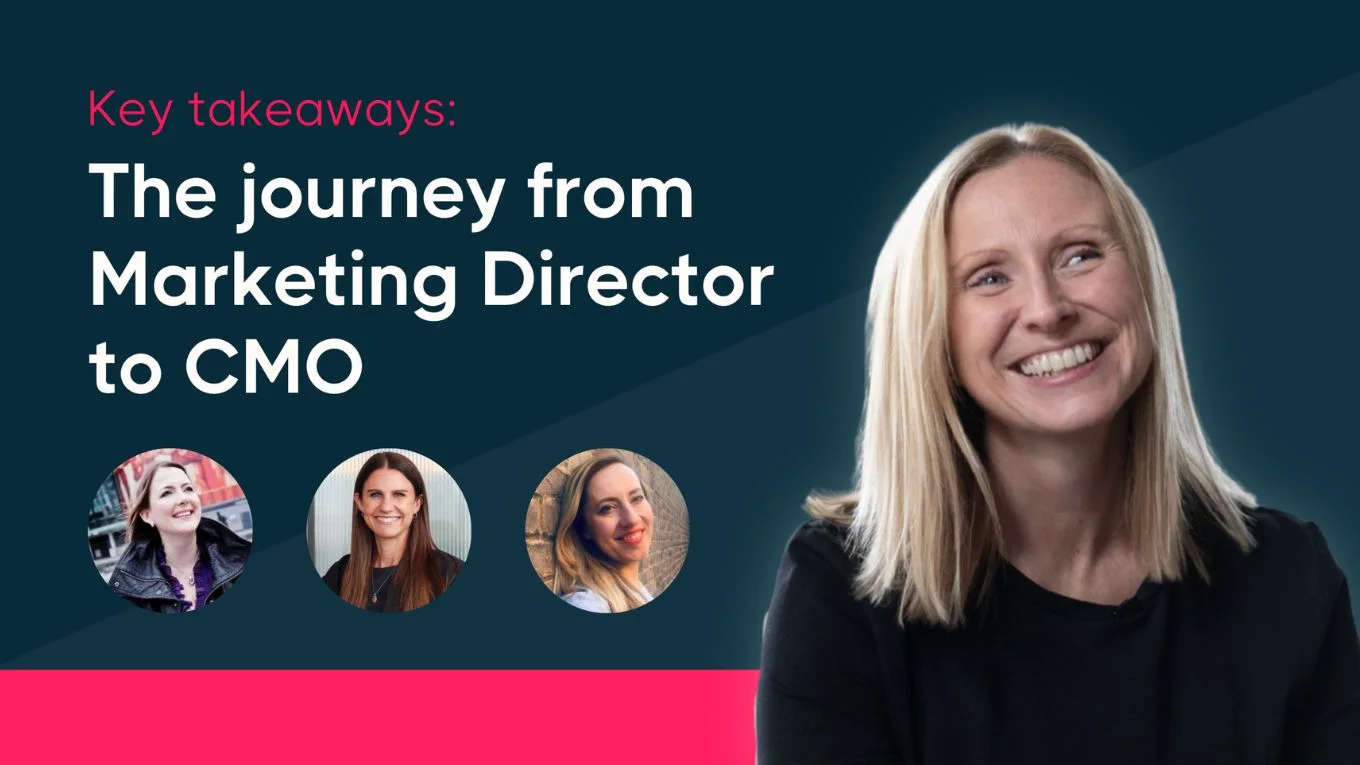
These insights were derived from our recent roundtable discussion on The leadership journey from Marketing Director to CMO. If you'd like to join us at our next event or to talk to us about taking the step up to CMO, please get in touch with our team.